



The Switzerland of data picked a side
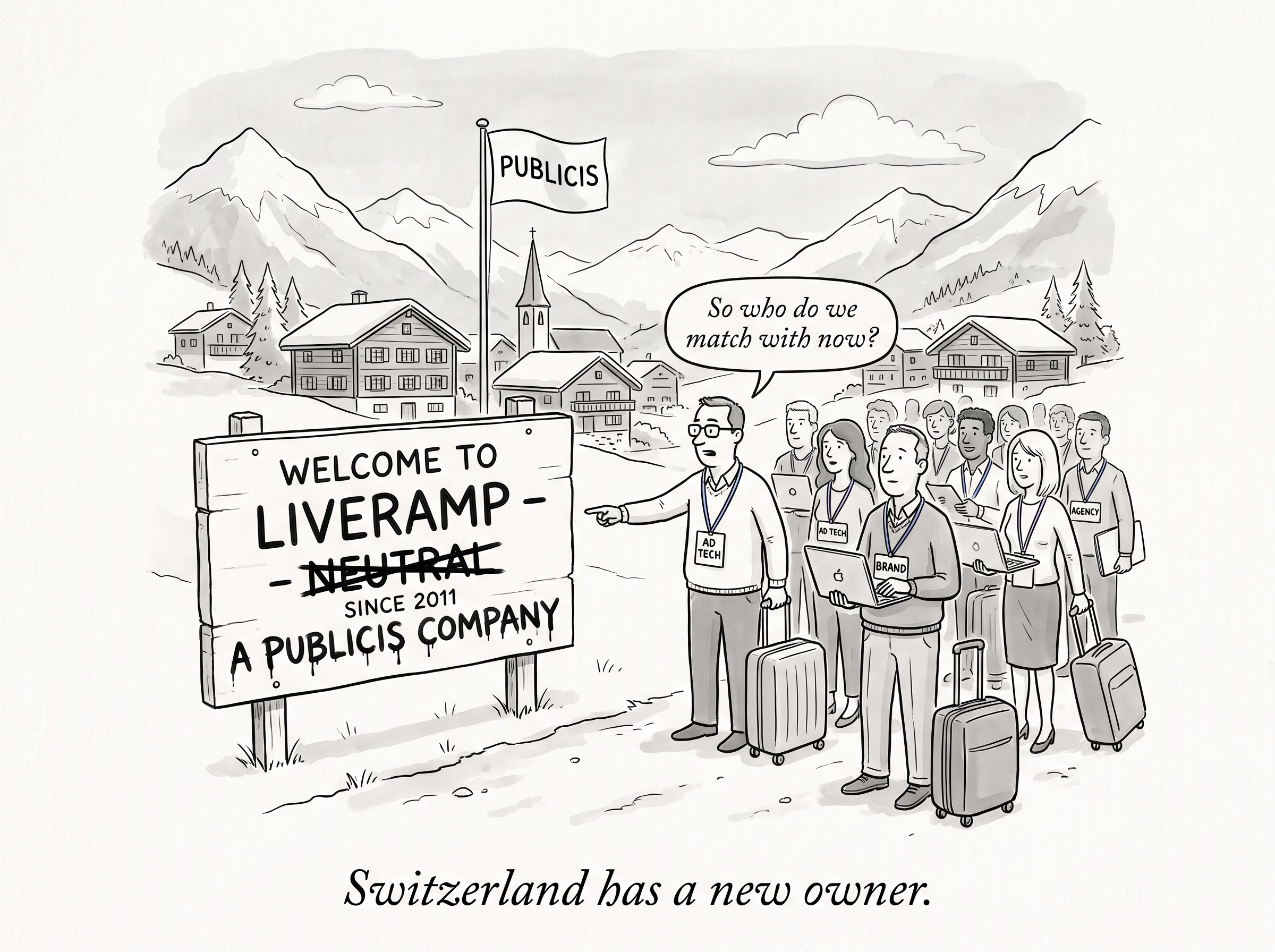
For more than a decade, LiveRamp sold the ad industry on one idea: it would stay out of the fight. Scott Howe once described the job as being "the neutral, agnostic power grid," aka the Switzerland of data. And for the most part, LiveRamp delivered.
But in May, Publicis agreed to buy the “neutral, agnostic power grid.” Shareholders signed off in August, and the deal is expected to close before the end of the year.
I don't blame LiveRamp for taking the offer. It was a smart business decision, and Publicis has promised to keep the platform open to everyone. But promises only last as long as the incentives behind them, and in a few months, Switzerland will have a new owner.
Why the neutral middle worked
For years, the industry rented its identity from LiveRamp, and it wasn't a hard decision. LiveRamp was easy to trust. It didn't sell media, didn't run an agency and didn't compete with its customers. Everyone matched through the same RampID, even companies that competed with each other, because nobody had to wonder who was on the other side.
Yeah the industry griped about the pricing and the access, but we kept on renting, because trust made renting make sense. Your data had to travel to a matcher anyway, so you sent a file, waited a few days and got back an audience you could activate almost anywhere. The rent was worth paying because the landlord had no stake in how your business did.
The neutral era is over
Now the landlord has a side. Once the deal closes, LiveRamp is a Publicis company.
For a decade, LiveRamp was where the industry met. When a brand, a retailer and a publisher needed to match their data, LiveRamp was the one place all three trusted, because it had no side. After the close, that meeting place belongs to one of the biggest agency groups in the world.
The deal ends the model the industry grew up on: renting your identity from a company with no stake in how your business does. From here on, the first question for any identity partner is whose side it's on.
And that’s a big, big problem
Think about what flows through your identity provider: your first-party data, your match rates, your audience builds, your conversion signals. That's the record of which customers buy and which campaigns earn their budget. It's the most sensitive performance data you have, and once this deal closes, all of it sits inside a competitor's ecosystem.
Picture a CPG brand running a clean room match with a retailer to see which shoppers saw an ad and then bought. After the close, that answer runs through infrastructure owned by a company that may be running media for the brand's biggest rival.
And leaving gets harder the longer you wait. RampIDs are partner-encoded, so taking your identity history with you means asking the vendor for help. And the company setting your price now has a media business of its own to protect.
Identity isn't data, it is your customers
We've gotten used to talking about identity like plumbing: hashed emails, device IDs, loyalty numbers, match keys. But every one of those keys is a person who bought from you, or might. Put together, your identity graph is the clearest picture of your customers you'll ever have. It is a brand’s crown-jewels, the most valuable asset possible.
Handing that picture to a neutral vendor was a reasonable trade. Handing it to a company that also works for your competitors is a different decision, and it deserves to be made on purpose.
Your data, their agents.
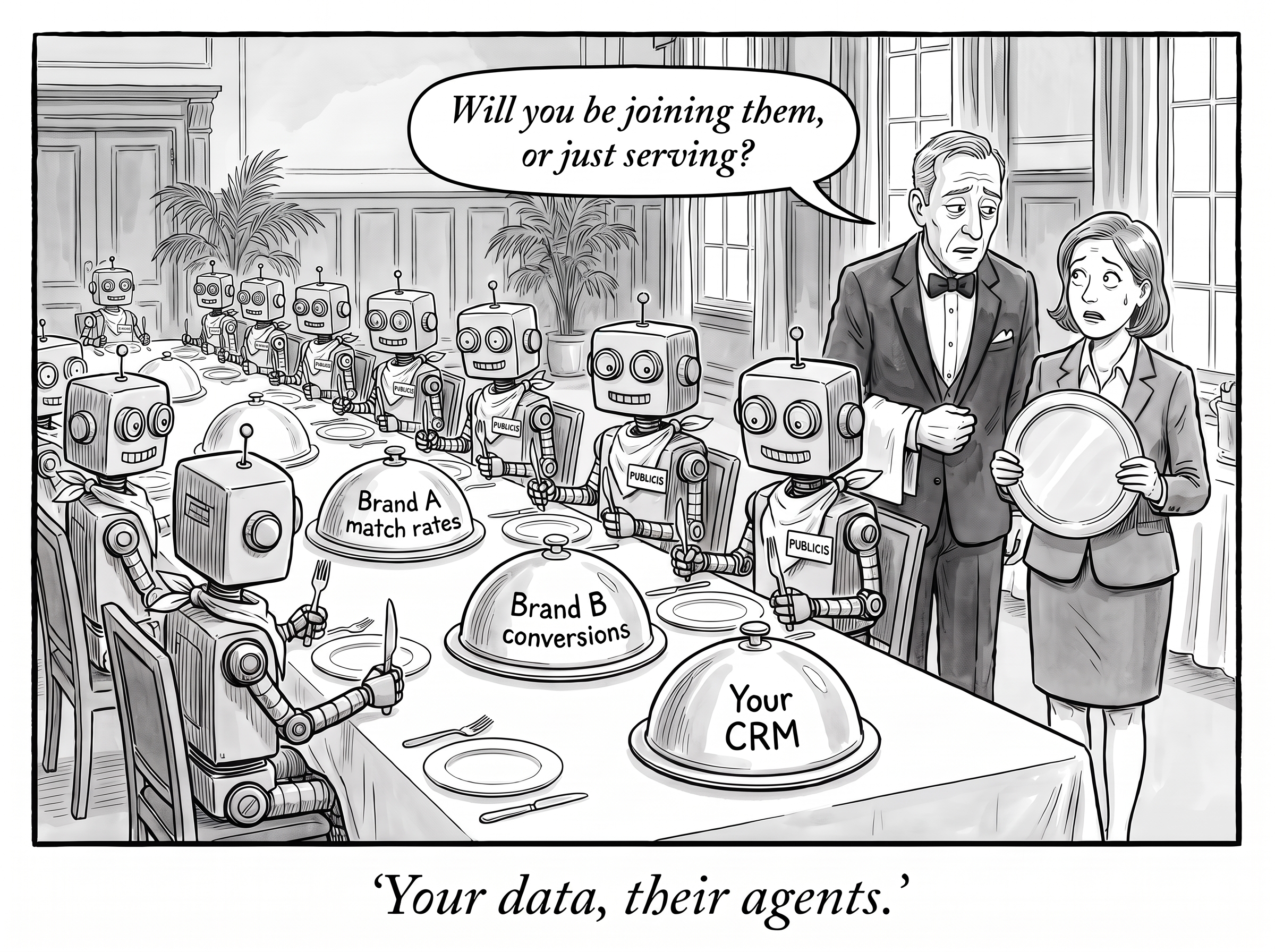
Here's the part of this deal that should worry you most. Publicis didn't buy LiveRamp for the matching business. It said so: the deal is about "data co-creation for smarter agents," and Digiday summed up the bet in one line: whoever controls the data owns the AI era.
Agents are only as good as what they learn from. LiveRamp sits in the middle of more first-party data than almost anyone in advertising: the audiences you build, the matches that work, the campaigns that convert. That's exactly the signal an AI agent needs to plan, buy and optimize media on its own.
Maybe LiveRamp will stay open and neutral, as Publicis has promised. But the trade press keeps asking the same question: where's the firewall, and who checks it? Even if your raw files stay walled off, what a system learns from them is much harder to fence in.
Your data. Their agents. And their clients sitting across the table from you.
The time to act is now
It's tempting to wait for the deal to close and see what happens. That's the most expensive option you have. Every renewal you sign this quarter is a contract with a company Publicis is about to own, and every month of matching adds history you'll need help to move.
Replacing LiveRamp is rarely a one-for-one swap, so start now. Map where your identity lives today and who controls each piece of it, then decide which pieces you want to own. The brands and agencies that start this quarter move on their own schedule. The rest move on Publicis's.
At Narrative, we give brands and agencies a fully independent alternative to LiveRamp. If you're rethinking your identity strategy, let’s talk.
Explore related